


PPA (Paragliding and Paramotor Association) Pilot Development System

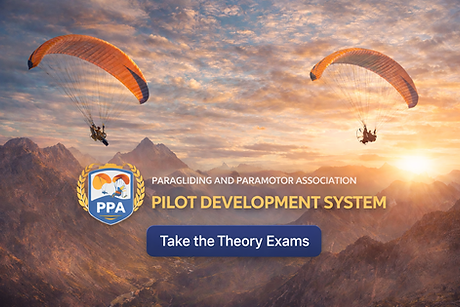
The PPA (Paragliding and Paramotor Association) Pilot Development System is a structured training, assessment, certification, and progression framework designed to develop real skill, real judgement, and real flying ability at every stage of pilot development.
Developed by PPG Training UK, the system sets a clear and consistent standard for how pilots are trained, assessed, progressed, certified, and verified.
This is not based on attendance.
It is not based on airtime alone.
It is based on demonstrated ability, defined standards, and proven progression.
A Structured Pilot Development Framework
The PPA system is built to develop capable, well-rounded pilots through clearly defined stages of progression.
Each level represents a recognised standard of ability. Pilots move forward by demonstrating the required level of control, judgement, consistency, awareness, and safety before progression is recognised.
The objective is simple: to produce pilots who do more than just get airborne.
Pilots progressing through this system are trained to:
-
Control the wing properly
-
Assess conditions accurately
-
Make sound decisions
-
Launch and land consistently
-
Progress safely and confidently
This is what real pilot development looks like.
Mandatory Theory Exams
All pilots progressing through the PPA system are required to complete and pass a series of mandatory online theory examinations.
These examinations form a core part of the system and ensure that every pilot develops the knowledge required to support safe and competent practical progression.
Theory standards include:
-
Safety procedures
-
Air law and pilot responsibilities
-
Equipment knowledge and setup
-
Weather and conditions
-
Emergency procedures
Key Requirements
-
All core theory examinations must be passed before solo flight
-
Most examinations require a minimum 80% pass mark
-
Critical safety and tandem-related examinations require 100% pass marks
-
Certificates are issued upon successful completion
No pilot progresses through the PPA system without meeting the required theory standard.
Disciplines
The PPA Pilot Development System applies across both major flight disciplines:
-
Paragliding (foot launch)
-
Paramotor (powered flight)
Pilots are assessed within each discipline separately. That means a pilot may hold different levels depending on their ability, experience, and development within each area.
For example:
-
P5 Paragliding
-
P3 Paramotor
Progression is always based on demonstrated skill, control, judgement, and safety within the relevant discipline.
How the System Works
Every pilot progresses through clearly defined stages. At each level, the required standard must be demonstrated before progression is recognised.
Progression is based on:
-
Wing control
-
Launch and landing ability
-
Judgement and decision-making
-
Understanding of conditions
-
Overall consistency and safety
The principle is simple:
Progression is based on skill, control, judgement, and consistency, not just time in the air.

Pilot Levels
Each pilot level represents a defined stage of development within the PPA system.
P1 – Beginner Pilot
Overview
Introduction to equipment, safety, and basic wing control.
Focus Areas
-
Equipment understanding
-
Basic ground handling
-
Forward launches
-
First controlled wing movements
Standard to Progress
-
Demonstrates safe equipment handling
-
Maintains basic control of the wing in light conditions
-
Understands fundamental safety procedures
P4 – Advanced Pilot
Overview
Strong control in varied conditions with increased independence.
Focus Areas
-
Active piloting
-
High-wind ground handling
-
Advanced launch techniques
-
Decision-making in changing conditions
Standard to Progress
-
Demonstrates control in stronger or more dynamic conditions
-
Makes safe, independent decisions
-
Maintains control throughout all phases of flight
P2 – Novice Pilot
Overview
Developing consistency in launches, control, and early flight skills.
Focus Areas
-
Improved ground handling
-
Controlled take-offs
-
Initial flight experience
-
Landing awareness
Standard to Progress
-
Consistent forward launches
-
Safe, controlled short flights
-
Basic understanding of conditions and landing approach
P5 – Master Pilot
Overview
High-level skill, precision, and confidence across a wide range of conditions.
Focus Areas
-
Precision wing control
-
Advanced ground handling mastery
-
Situational awareness and leadership
-
Flying across varied environments
Standard to Achieve
-
Consistent high-level control
-
Excellent judgement and awareness
-
Ability to adapt to conditions confidently and safely
-
Completion of SIV training x2
P3 – Intermediate Pilot
Overview
Building control, confidence, and independent flying ability.
Focus Areas
-
Reverse launches
-
Improved canopy control
-
Flight awareness and planning
-
Consistent take-offs and landings
Standard to Progress
-
Confident reverse launches
-
Controlled flights with good judgement
-
Safe and consistent landings
Why These Levels Matter
This structured framework ensures that every pilot progressing through the PPA system develops:
-
Strong wing control
-
Safe flying habits
-
Real understanding of conditions
-
The ability to progress confidently and independently
Each level means something because each level must be earned.
Tandem Levels
The PPA Tandem Pathway is designed for experienced pilots progressing into flying with passengers.
Tandem flying carries a significantly higher level of responsibility, control, judgement, communication, and risk management. Progression is only recognised when the required standard has been demonstrated consistently and safely.
T1 – Tandem Pilot
(Non-Commercial)
Overview
Entry-level tandem rating for experienced pilots beginning to fly with passengers on a non-commercial basis.
Focus Areas
-
Passenger safety and briefing
-
Equipment setup and checks
-
Launch control with additional weight
-
Stable, controlled flight
-
Safe landing management
Standard to Achieve
-
Holds a minimum advanced pilot level, typically P3+
-
Demonstrates consistent control during take-off, flight, and landing
-
Understands passenger handling and communication
-
Is able to assess safe conditions for tandem flying
T2 – Tandem Pilot
(Commercial Level)
Overview
Designed for pilots operating at a higher standard, suitable for structured or commercial-style tandem operations.
Focus Areas
-
Consistent, repeatable tandem operations
-
Advanced passenger management
-
Decision-making under pressure
-
Site awareness and operational safety
-
Professional approach to flying
Standard to Achieve
-
High level of consistency and control
-
Strong judgement across a range of conditions
-
Ability to manage multiple flights safely
-
Demonstrates professionalism and responsibility
T3 – Advanced /Instructor Level Tandem Pilot
Overview
The highest level of tandem flying, combining advanced skill, leadership, and the ability to mentor or guide other tandem pilots.
Focus Areas
-
Instructor-level flying standards
-
Training and mentoring other tandem pilots
-
Advanced operational judgement
-
High-level control in varied conditions
-
Expert-level risk management
Standard to Achieve
-
Exceptional consistency and control
-
Demonstrates leadership and mentoring ability
-
Capable of operating at a professional level across varied environments
-
Sets the benchmark for safe and effective tandem flying
Tandem Principle
Tandem progression is based on skill, control, consistency, and responsibility, not just flight numbers.
Instructor Pathway
The PPA Instructor Pathway is designed to develop pilots into capable, confident, and responsible instructors.
Becoming an instructor is not based purely on pilot level. It is based on the ability to teach, communicate, assess, and manage student safety to a high standard.
All instructor progression is based on demonstrated competence, experience, professionalism, and the ability to develop other pilots properly.
INS1 – Assistant Instructor
Overview
Entry-level instructional role supporting training operations under supervision.
Focus Areas
-
Assisting students during ground handling sessions
-
Demonstrating correct techniques
-
Supporting equipment setup and safety checks
-
Reinforcing training methods taught by the lead instructor
Standard to Achieve
-
Strong pilot foundation, typically P3–P4 minimum
-
Good communication and coaching ability
-
Demonstrates safe practice and awareness
-
Able to support structured training sessions
INS2 – Instructor
Overview
Fully capable instructor responsible for delivering structured training and progressing students.
Focus Areas
-
Delivering ground school and practical training
-
Assessing student progression
-
Teaching launch, control, and landing techniques
-
Managing student safety and development
Standard to Achieve
-
High-level pilot ability, typically P4–P5
-
Consistent and safe decision-making
-
Strong teaching and communication skills
-
Ability to assess and develop students effectively
INS3 – Senior Instructor
Examiner
Overview
The highest instructional level within the PPA system, combining expert flying ability, leadership, examiner-level assessment authority, and the ability to train, mentor, and evaluate other instructors.
Focus Areas
-
Instructor mentoring and development
-
Designing and delivering advanced training programmes
-
Examiner-level assessment and sign-off
-
High-level decision-making and risk management
-
Maintaining training standards and system integrity
Standard to Achieve
-
Expert-level pilot skill and consistency
-
Proven ability to train, assess, and develop instructors and advanced pilots
-
Leadership within training environments
-
Authority to uphold and protect instructional standards
-
Sets the benchmark for safety, professionalism, and teaching quality
Instructor Principle
Instructor progression is based on the ability to develop pilots — not just personal flying skill.
Certification and Verification
Pilots trained and assessed through this system may be issued a PPA Pilot ID Card, including:
-
Unique Pilot ID Number
-
Verified training level
-
Discipline ratings
All verified pilots can be cross-referenced through the official PPA Verified Pilots Register.
Training Providers and Endorsement
PPG Training UK operates as a founding training provider within the PPA system.
As the framework develops, other training schools may be endorsed under the PPA system, provided they meet the required standards of training, assessment, certification, and pilot development.
Approved training providers may be authorised to:
-
Train pilots under the PPA system
-
Assess and progress pilots through defined levels
-
Register pilots within the official verification system
This ensures that the system remains structured, controlled, and consistent as it grows.
Core Principle
The PPA Pilot Development System exists to create real pilots through structure, standards, accountability, and progression.
Skill first.
Standards first.
Progression based on ability — not just airtime.